Many Malaysian homes have two kitchens: a wet kitchen for heavy cooking and a dry kitchen for light meals, coffee and entertaining. If you are renovating, one of the first questions is whether you need both, and how to plan each one.
This guide explains the difference between a wet kitchen and a dry kitchen, the pros and cons of each, and how to choose the right layout for your home.
What Is a Wet Kitchen?
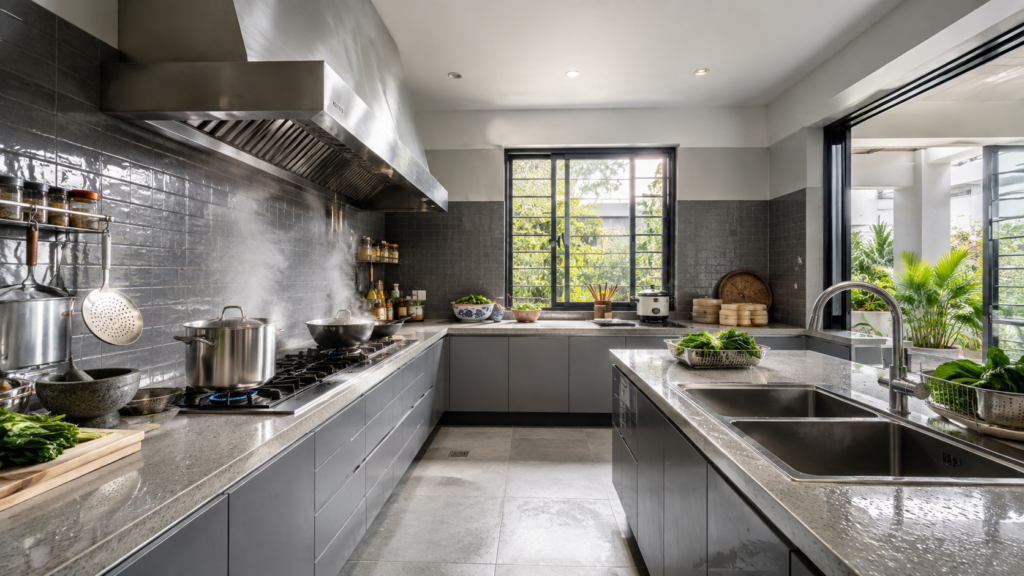
A wet kitchen is where the heavy cooking happens. It is built for stir-frying, deep frying, steaming, boiling soups and cleaning fresh ingredients like fish and meat. Wet kitchens are usually at the back of the house, close to the service yard or drying area.
Typical features of a wet kitchen include:
- A powerful hob, often a gas stove suited to wok cooking
- A strong cooker hood to remove smoke, oil and smells
- A large, deep sink for washing ingredients and pots
- Durable, easy-to-clean surfaces such as tiles, stainless steel or solid countertops
- Water-resistant cabinets, often aluminium near the sink
- Good ventilation, such as a window or a door to the yard
What Is a Dry Kitchen?
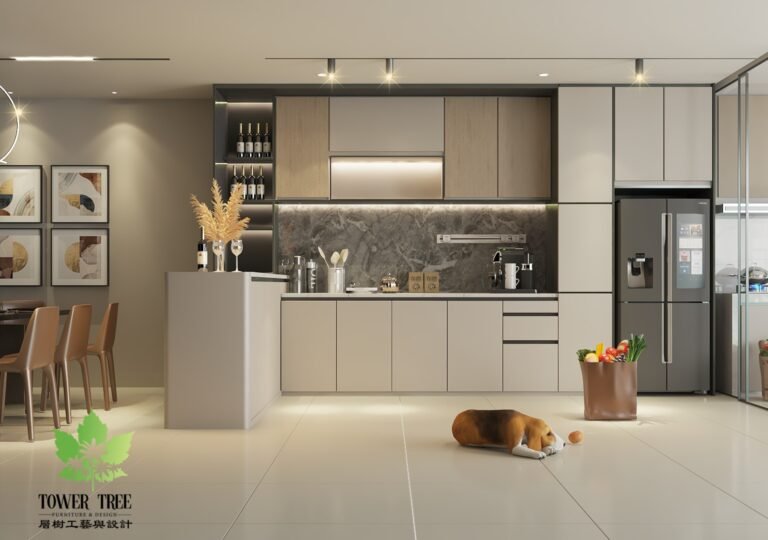
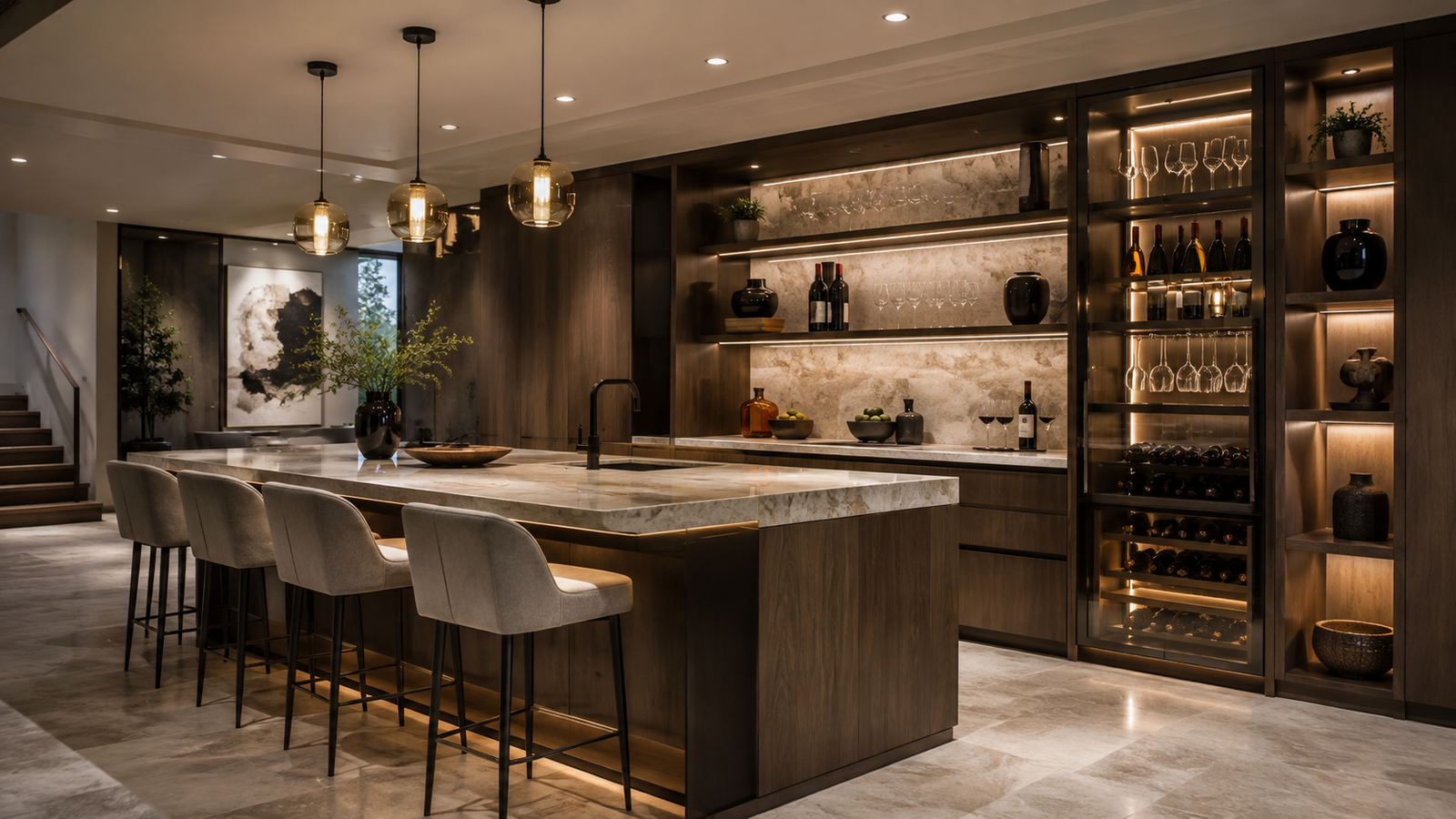
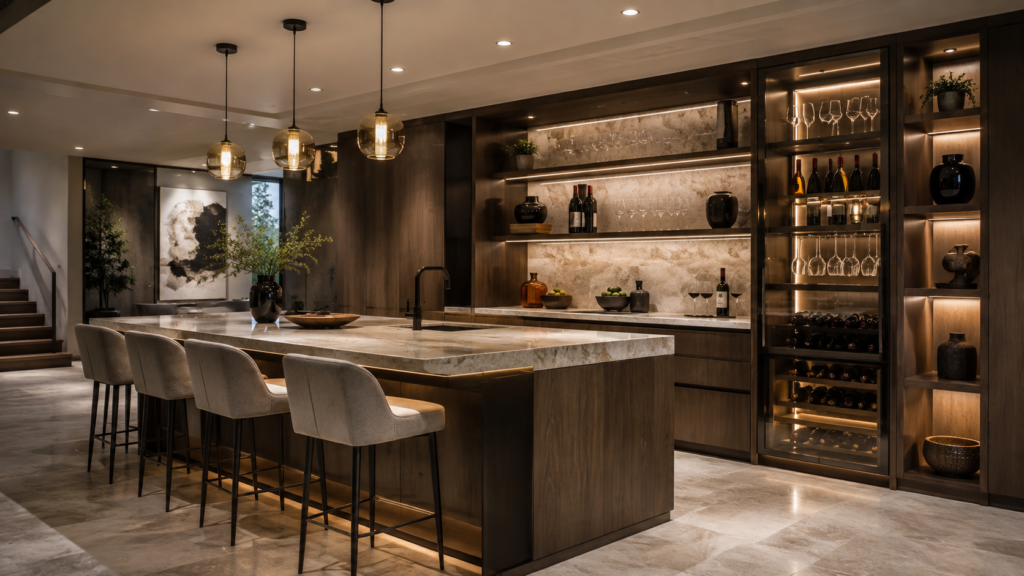
A dry kitchen is for light cooking and food preparation that does not create much smoke or oil, such as making drinks, toasting bread, reheating food, baking or preparing salads. It is usually part of the open living and dining area, so it is designed to look good as well as work well.
Typical features of a dry kitchen include:
- An island or breakfast counter that doubles as a dining or social space
- Built-in appliances such as an oven, microwave, coffee machine or induction hob
- A refrigerator and pantry storage
- Decorative finishes, display shelves and feature lighting
- A smaller sink for light washing
Wet Kitchen vs Dry Kitchen: Key Differences
- Purpose: the wet kitchen handles heavy cooking; the dry kitchen handles light cooking, preparation and entertaining
- Location: the wet kitchen is usually at the back of the house; the dry kitchen is often open to the dining or living area
- Materials: the wet kitchen needs tougher, water- and heat-resistant materials; the dry kitchen can use more decorative finishes
- Ventilation: the wet kitchen needs strong ventilation; the dry kitchen needs less
- Appearance: the wet kitchen is practical; the dry kitchen is a feature of the home
Do You Need Both?
Having both a wet kitchen and a dry kitchen is ideal if:
- You cook Asian dishes with strong smells and a lot of oil regularly
- You live in a landed home with space at the back
- You want an open, clean-looking kitchen that connects to your living and dining area
- Several family members cook, or you often host guests
A single kitchen may be enough if you cook lightly, eat out often, or live in a condominium with limited space. In that case, you can still create two zones within one kitchen: a heavy-duty cooking side with a strong hood, and a cleaner preparation and serving side.
How to Plan Wet and Dry Kitchens Together
Separate the Smoke and Smells
A glass partition or sliding door between the wet kitchen and the rest of the house keeps smoke and cooking smells out of your living areas, while still letting light through.
Put Each Kitchen Where It Works Best
Place the wet kitchen close to the yard, drainage and gas supply. Place the dry kitchen near the dining area, so food and drinks move easily to the table.
Choose the Right Cabinet Materials
Use water-resistant materials in the wet kitchen, especially under the sink. The dry kitchen can use laminate or other decorative finishes. Our guide to aluminium, melamine and plywood kitchen cabinets explains which materials suit each area.
Plan Electrical and Gas Points Early
Decide where your hob, oven, refrigerator and small appliances will go before work begins. Sockets, gas points and water outlets are much easier to plan at the start than to move later.
Check Condominium Rules
If you live in a condominium, check with building management about renovation rules, gas use and any restrictions on hacking walls or changing the kitchen layout.
Frequently Asked Questions
Is a wet kitchen necessary in Malaysia?
It is not compulsory, but it is very useful for households that cook Asian food often. It keeps heavy smoke, oil and smells away from the rest of the home.
Can a dry kitchen have a stove?
Yes. Many dry kitchens have an induction or electric hob for light cooking. Heavy wok frying is better kept in the wet kitchen.
How do I make a small kitchen work as both wet and dry?
Divide the kitchen into zones, invest in a strong cooker hood and use durable materials around the hob and sink. Our small kitchen design ideas have more tips for compact spaces.
Plan Your Kitchen with Tower Tree
Tower Tree designs and builds wet and dry kitchens for homes across Johor, with cabinets made in our own workshop. Explore our kitchen renovation service, or read our complete guide to planning your home renovation.
Ready to plan your new kitchen? Contact Tower Tree for a free consultation.