Choosing kitchen cabinets is one of the biggest decisions in any kitchen renovation. The cabinet material decides how well your kitchen handles heat, steam, water and daily wear, and it affects your budget more than almost any other choice. In Malaysia, three materials come up in almost every discussion: the aluminium kitchen cabinet, melamine kitchen cabinets and plywood cabinets with a laminate finish.
Each material has a place. The right choice depends on where the cabinet goes, how you cook and how long you want the kitchen to last. This guide compares the three so you can talk to your designer with confidence.
Why Cabinet Material Matters in a Malaysian Kitchen
Our climate is hot and humid all year round, and many Malaysian homes cook heavily with woks, deep frying and boiling soups. That means kitchen cabinets face more steam, oil and water splashes than kitchens in many other countries.
The areas that take the most punishment are:
- The sink cabinet, where leaks and water splashes are common
- The cabinets around the hob and oven, which face heat and oily steam
- The lower cabinets near the floor, which are exposed when the floor is washed
A good kitchen cabinet design often mixes materials: a tougher material where water and heat are heavy, and a more decorative, budget-friendly material where conditions are drier.
Aluminium Kitchen Cabinet: Pros and Cons
An aluminium kitchen cabinet uses an aluminium frame and carcass, usually with aluminium, glass or composite door panels.
Pros
- Does not rot, swell or attract termites
- Handles water and humidity very well, which suits wet kitchens and sink areas
- Easy to wipe clean and low maintenance
Cons
- Fewer finish and colour options than laminate, although wood-grain and matte finishes are now available
- Thin panels can dent if knocked hard
- Can look more utilitarian, so it is less common in open, show-style dry kitchens
Best for: wet kitchens, sink cabinets, service yards and outdoor or semi-outdoor cooking areas.
Melamine Kitchen Cabinets: Pros and Cons
Melamine kitchen cabinets are usually made from particleboard (chipboard) faced with a melamine surface. The melamine layer gives the board its colour or wood-grain look.
Pros
- Budget-friendly, often the most economical option
- A wide range of colours and wood-grain finishes
- Smooth, easy-to-clean surface
Cons
- The board can swell if water gets into exposed or poorly sealed edges
- Holds screws less firmly than plywood, so hinges can loosen over time with heavy use
- Not ideal near the sink or in a heavy-cooking wet kitchen
Best for: dry kitchens, upper cabinets, pantry storage and areas that stay dry. Good edge banding and proper sealing make a big difference to how long melamine lasts.
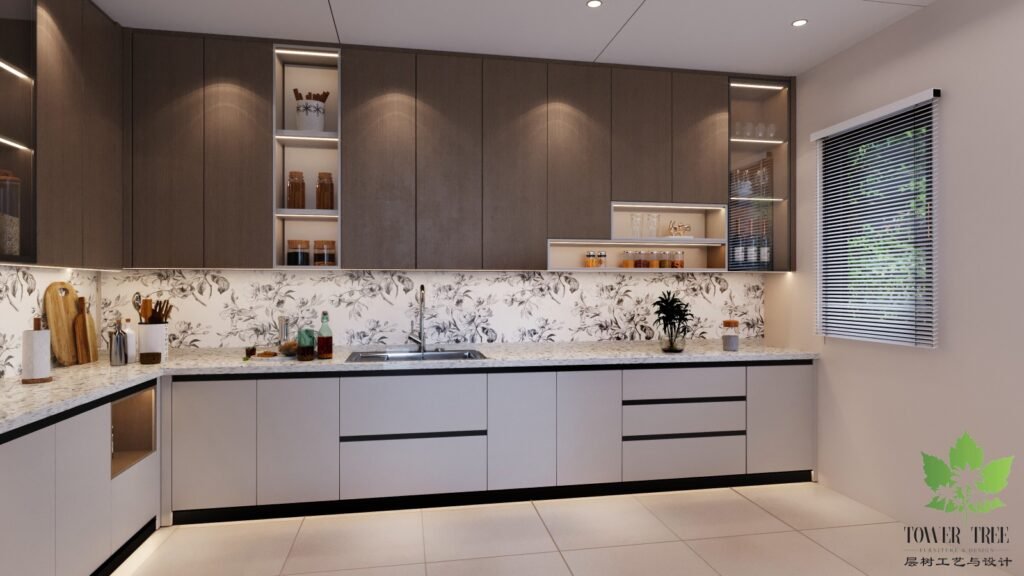
Plywood Cabinets with Laminate: Pros and Cons
Plywood is made from thin layers of wood glued together in alternating directions. For kitchen cabinets, it is usually finished with a high-pressure laminate on the outside.
Pros
- Stronger and more stable than particleboard, and holds screws and hinges firmly
- Handles humidity better than chipboard, especially when edges are sealed properly
- Laminate finishes come in many colours, textures and wood-grain looks
Cons
- Costs more than melamine particleboard
- Still a wood product, so it is water-resistant rather than waterproof; a long-term leak will damage it
Best for: most of the kitchen, including lower cabinets and dry kitchens where you want durability and a premium look. Many homeowners use plywood for the main cabinets and aluminium for the sink area.
Side-by-Side Comparison
- Water resistance: aluminium is the strongest, plywood is good with sealed edges, melamine particleboard is the most sensitive
- Strength and screw holding: plywood and aluminium are strong, melamine particleboard is weaker
- Design options: melamine and laminate offer the widest choice, aluminium is more limited
- Budget: melamine is usually the most economical, plywood and aluminium cost more
- Termites: aluminium is not affected; wood-based boards need good treatment and installation
What About the Countertop?
The cabinet material is only half the story. Your countertop takes the heat, knives and spills every day. Common choices in Malaysia include quartz, solid surface, granite and sintered stone. Ask your designer how each one handles hot pots, stains and scratches, and choose a countertop that suits how heavily you cook.
How to Choose the Right Kitchen Cabinet Material
Ask yourself these questions before deciding:
- Do you have a separate wet kitchen and dry kitchen, or one kitchen for everything?
- How heavily do you cook, and how often?
- Is the cabinet near the sink, the hob or the floor?
- How long do you plan to stay in the home?
- Is the look of the kitchen important, for example in an open-plan dry kitchen?
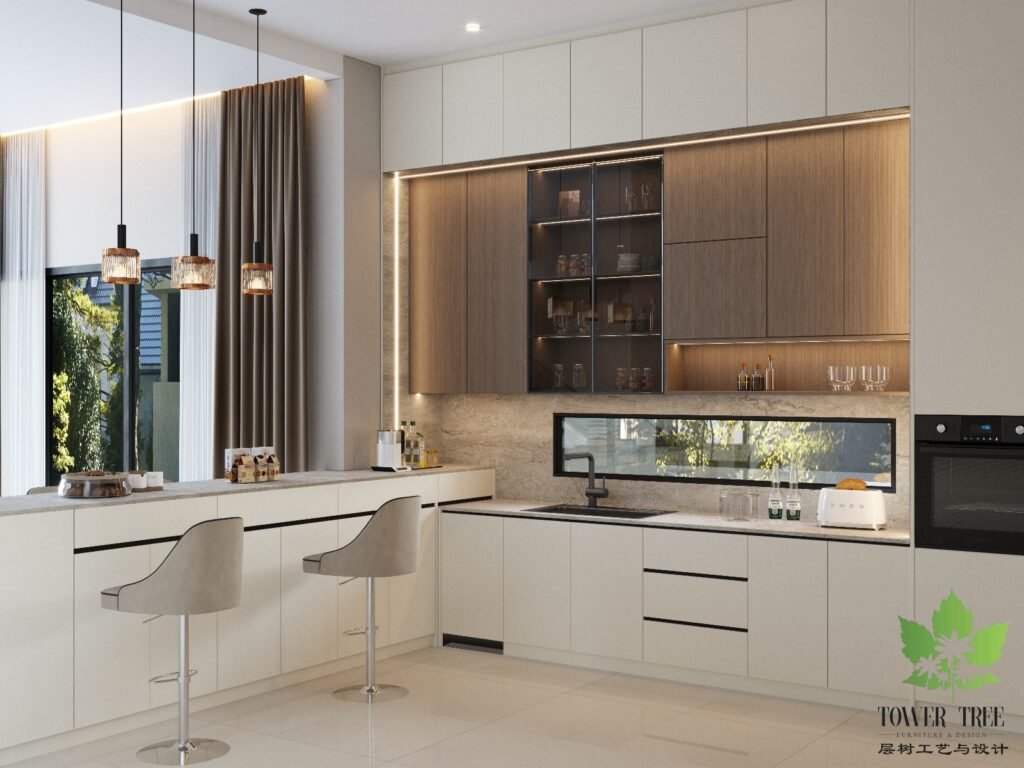
A practical approach many homeowners take is to use aluminium for the sink and wet areas, plywood with laminate for the main lower cabinets, and melamine or laminate for upper cabinets and dry storage. This balances durability, design and budget. If you are still deciding between layouts, our guide on wet kitchen vs dry kitchen explains how each space is used.
Frequently Asked Questions
Which kitchen cabinet material is most durable in Malaysia?
For wet areas, aluminium is the most durable because it does not swell or attract termites. For the rest of the kitchen, plywood with a laminate finish offers a good mix of strength and appearance.
Are melamine kitchen cabinets a bad choice?
No. Melamine is a sensible, budget-friendly choice for dry kitchens, upper cabinets and pantries. The key is to keep it away from constant water and to make sure the edges are properly sealed.
Can I mix cabinet materials in one kitchen?
Yes, and it is often the smartest approach. Using different materials for wet and dry zones lets you spend where durability matters most.
Plan Your Kitchen Cabinets with Tower Tree
Tower Tree designs and builds kitchen cabinets in our own workshop in Johor, so we can recommend the right material for each part of your kitchen. Explore our kitchen renovation and custom carpentry services, or read our complete guide to planning your home renovation before you start.
Ready to plan your new kitchen? Contact Tower Tree for a free consultation.